If you are setting up fume extraction over a welding bench, or running fresh or stale air between a fan and a room, you need flexible ducting with a reinforced wall. PVC Ventilation hose TERMORESIST is a flexible duct built for that job. This guide covers what it is made of, what the product page says it is suitable for, the three bores and two lengths you can order, and how to fit it so your extractor actually does its work.
How TERMORESIST flexible ducting is built
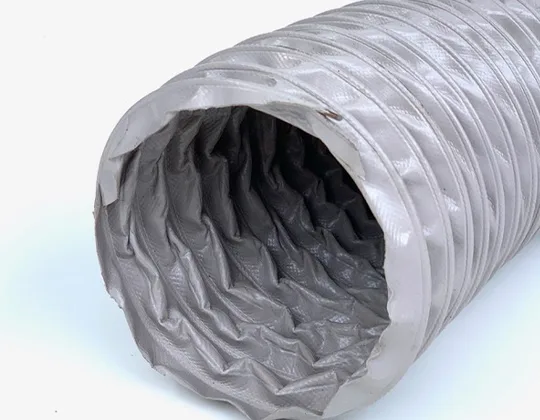
TERMORESIST is a flexible hose, or duct, made from PVC coated polyester fabric.
The reinforcement is a steel helix welded between the two layers of the wall. The helix reinforces the wall.
The working temperature on the product page is -20°C to +100°C. That covers unheated workshops in winter and warm air drawn away from a work area, but it is the limit of the duct, so do not put it on the outlet of anything that discharges air hotter than that.
What it is suitable for
The product page lists three uses:
- Conditioning plants, for connecting air handling and conditioning equipment.
- Ventilation systems, for supply or extract runs where a flexible section is easier than rigid duct.
- Suction of welding vapours, for example fume extraction at a welding bench.
The page also describes the duct as flame resistant. That matters in a welding area, where sparks and spatter land on whatever is near the torch. Flame resistant is not the same as fireproof, so keep the mouth of the duct a sensible distance from the arc, do not let it lie in the spatter zone, and check it for burn marks or holes as part of your routine.
The page does not state any approvals or certifications, and it does not list uses beyond the three above. If you have a different application in mind, ask before you order.
Choosing the bore: 127 mm, 152 mm or 180 mm
TERMORESIST is stocked in three inner diameters: 127 mm, 152 mm and 180 mm. The bore is the one measurement that has to be right, because the duct must slide over the extractor spigot or fan outlet with a snug fit.
- Measure the outside diameter of the spigot you are pushing the duct onto. The duct's inner diameter should match it.
- Do not go by a nominal size printed on the extractor if you can measure the spigot itself. Lips, flanges and tapers vary.
- If your spigot falls between two sizes, do not force a smaller duct over it or pack out a larger one with tape. Use a proper reducer or adaptor so the joint stays sealed.
Our guide on how to measure hose bore (inner diameter) explains how to measure the bore accurately, ideally with callipers on the inside jaws.
Lengths: 1 m or 10 m
Each bore is sold as a 1 m or a 10 m length, and the product page shows the ex VAT price of each option. A 1 m piece suits a short flexible link, for example between a fan and a fixed duct, or a single fume hood over one bench. The 10 m length gives you enough for a longer run, or for cutting into several shorter sections across a workshop.
Order the length you need rather than a lot more. A longer duct means more resistance to the air, and the fan works harder for less draw at the far end. Cut lengths are prepared to order, and hose cut to your specification cannot be returned unless it is faulty, so check the run before you buy.
Fitting the duct to an extractor spigot
A flexible duct only works as well as its joints. A loose end lets the fan pull in room air at the joint instead of fumes at the hood. To fit it:
- Cut the duct square. Cut through the fabric with a sharp knife, then cut the steel helix with side cutters. Bend the cut end of the wire inward or tuck it back so there is no sharp end to snag hands or tear the wall.
- Push the duct well onto the spigot, past any lip or bead, so the overlap is generous.
- Secure it with a clamp sized to the outside diameter of the duct at the joint, not to the bore. Tighten it enough to hold and seal without crushing the helix.
- Do the same at the other end, whether it goes to a hood, a fume arm or a fixed duct.
- Run the extractor and check each joint by hand for air being drawn in. Re-seat and re-tighten if you feel any.
Keep runs short and straight
Flexible ducting is convenient, but every bend and extra metre adds resistance to the airflow. A few habits keep the extraction strong:
- Take the most direct route from hood to fan. Avoid sags, loops and coils of spare duct.
- Make bends gradual. A tight bend narrows the section at the corner and can kink the wall.
- Support long runs so the duct does not hang in a dip between fixing points.
- Keep the duct away from sharp edges and hot surfaces, and inspect it regularly for cuts, cracks, burns or a damaged helix.
How to order or ask
Choose your inner diameter (127 mm, 152 mm or 180 mm) and your length (1 m or 10 m) on the TERMORESIST product page, then add it to the cart or send the order on WhatsApp with the size already written out. Stocked lines ordered before 14:00 on a working day are packed the same day and sent from the UK, and delivery is priced by length, as set out on our delivery page. If you are not sure which bore fits your extractor, or you want to check the duct suits what you are extracting, call +44 (0) 7717 217388 and tell us the spigot size, the length of the run and what goes through it.