The fuel line on a motorcycle, lawnmower, generator, strimmer or pump engine is usually a short run of hose from the tank or fuel tap to the carburettor, sometimes with a filter in between. It sits close to a hot engine, it gets knocked, flexed and vibrated, and it is often the first part to harden and crack. Replacing it is a simple job if you start with the right hose and the right size. This guide covers the choice of hose, the difference between the two rubber fuel hoses we sell for this kind of work, and how to measure, fit and check the new line.
Why rubber fuel hose rather than clear tube
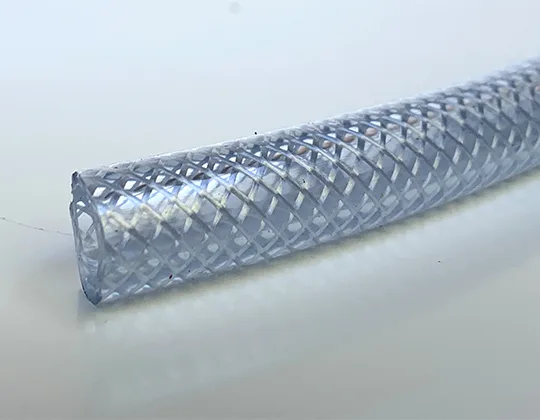
Clear plastic tube is tempting on a small engine because you can see the fuel moving. The problem is where the line lives: under the tank of a running engine, often near the cylinder or the exhaust. Any hose used there has to be rated for fuel and for the temperature it will actually see.
Both of the hoses below are black rubber hoses made for fuel. If you are considering any other hose, including a clear one, check the stated temperature range and fluids on its page first. If the page does not say fuel, do not use it for fuel.
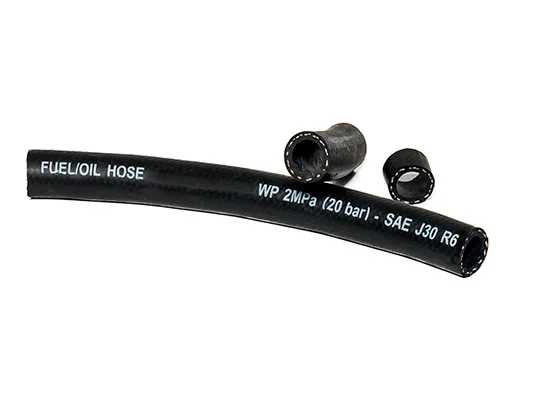
SAE J30 R6: fuel and oil, with a weather and ozone resistant cover
SAE J30 R6 is a flexible rubber hose for fuel, oil and industrial water. Our product page describes it as suitable for general contact with fuel and oil. The construction is:
- Tube: synthetic rubber, black, smooth, oil resistant.
- Reinforcement: synthetic cord.
- Cover: synthetic rubber, black, smooth, oil, weather and ozone resistant.
- Temperature: -40°C to +100°C.
The weather and ozone resistant cover is worth having on equipment that lives outdoors or in a damp garage, such as a mower, a generator or a bike parked outside. The hose comes in a 5mm and a 6mm bore, among others listed from 3.2mm up to 25mm.
One limit is stated plainly on the page: this hose is not designed to be submerged in petrol. It is for running fuel from the tank to the engine, not for use inside the tank. If your machine has a line that sits in the fuel, such as a pickup inside the tank, that section needs a hose made for submersion.
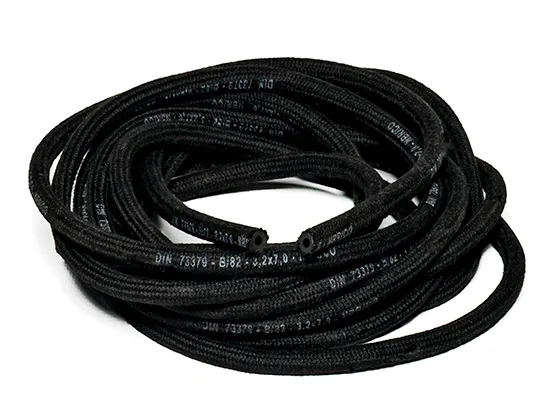
DIN 73379 B: fuel and coolant, with a textile braid
The fuel hose DIN 73379 B is described on its page as hose for fuel and coolant systems, for fuels with a maximum aromatic content of 50%, high grade fuels, diesel fuels, cooling liquids and non oxidising liquid detergents. Its construction is:
- Tube: NBR rubber, black, smooth.
- Cover: NBR rubber, reinforced with a heat resistant textile braid.
- Temperature: -40°C to +90°C.
- Bores: 3.2mm, 4mm, 5mm, 6mm, 7mm, 8mm, 10mm, 11mm, 12mm and 14mm.
It is a sensible choice when one machine needs both a fuel line and a small coolant or overflow line, or when you run diesel equipment, since the page lists both diesel and cooling liquids.
Which one to choose
Both are rubber fuel hoses, so the choice usually comes down to what the line carries and where it runs. Choose SAE J30 R6 if you want the higher stated top temperature of +100°C and a cover rated for weather and ozone, or if the line also carries oil. Choose DIN 73379 B if you want the braided cover, need a bore such as 11mm or 14mm, or also need hose for coolant. If your workshop manual or the old hose names a standard, match it.
Measuring the bore
Fuel hose is sold by its inner diameter, the bore, so that is the measurement that matters. Do not guess it from the outside of the old hose, and do not rely on a size someone quoted for a similar machine, as small engines vary even within one brand. The reliable methods are:
- Measure the outside diameter of the spigot or barb the hose pushes onto, at the fuel tap, filter or carburettor. The hose bore should match it.
- If the old hose is still soft enough, cut a clean end and measure across the inside with a vernier caliper.
- Check every connection on the run. The tap and the carburettor are not always the same size.
Our guide on how to measure hose bore explains each method in more detail. For length, measure along the route the hose will actually take, add a little for a gentle curve, and order enough to replace the whole run rather than joining old and new.
Fitting and clamping
Turn off the fuel tap or clamp the line before you start, work with the engine cold, and keep a rag and a container ready. Then:
- Cut the new hose square with a sharp blade so the end seats evenly.
- Push it fully over each spigot, past any raised barb.
- Fit a clamp at each joint, sized to the outside diameter of the hose, and tighten it just behind the barb. It should be firm, not so tight that it cuts into the rubber.
- Route the hose in smooth curves with no kinks, away from sharp edges, moving parts and the exhaust, and secure it so it cannot rub through on vibration.
- Open the fuel, let the line fill, and look at each joint for weeping before starting the engine.
Checking for cracking and when to replace
Every hose ages, and a fuel line is worth checking each time you service the machine and before it comes out of winter storage. Bend the hose gently and look at the outside of the curve: fine surface cracks, a hard or shiny feel, swelling near the clamps or a damp, fuel-smelling patch all mean it is time to replace it. Look closely at the ends, where cracking usually starts. If one section of the line is cracked, replace the whole run and its clamps rather than one piece.
How to order
Both hoses are priced per metre and cut to the length you need, from 1m to 50m. To order, open the product page, choose the bore, then pick the 1m option and set the quantity to the number of metres you need, or pick the 50m option for a full length where your bore offers one (on DIN 73379 B the 7mm and 11mm bores are sold by the metre only): SAE J30 R6 5mm, SAE J30 R6 6mm or fuel hose DIN 73379 B. Cut-to-length hose cannot be returned unless faulty, so measure first. If you are unsure, use the Ask about this button or call +44 (0) 7717 217388 with the bore, the length and what goes through the line, and we will help you choose.