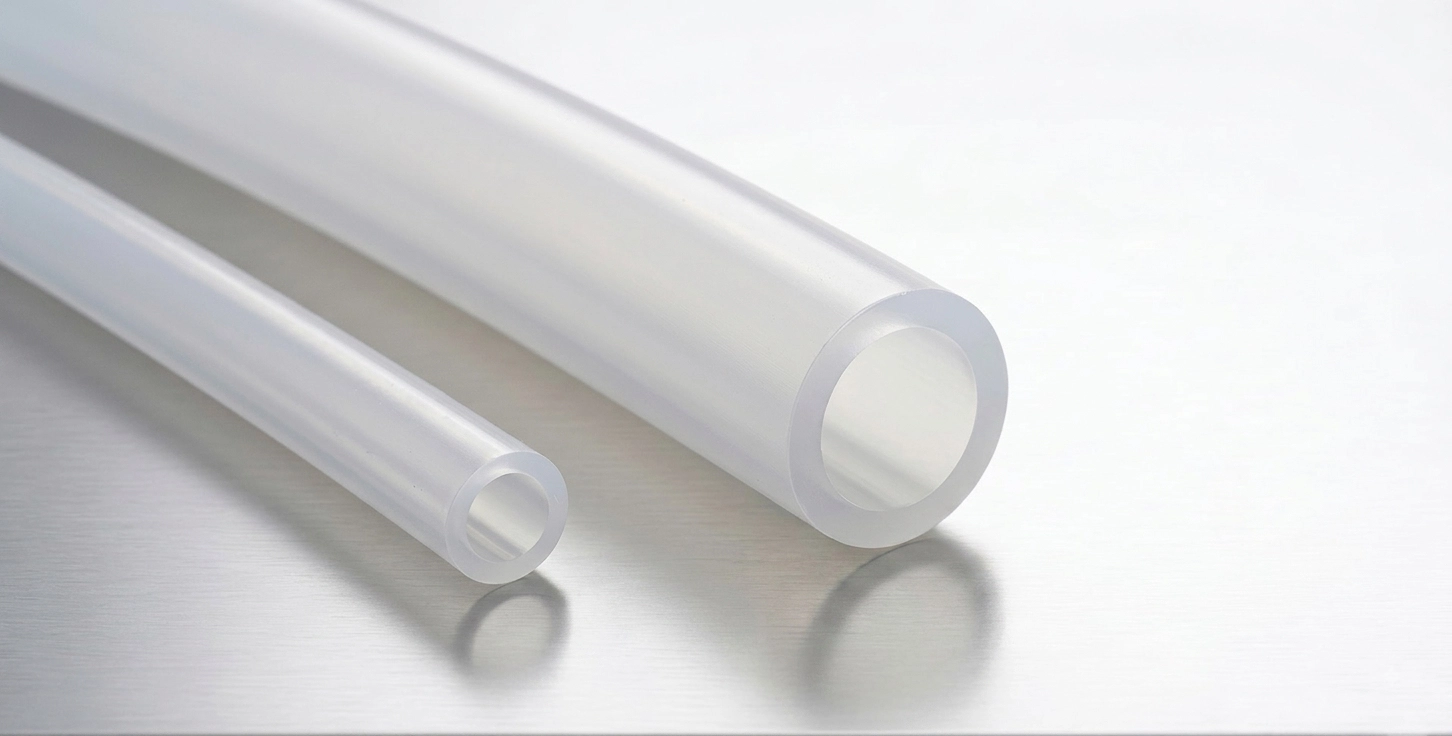
Silicone hose, often called silicone tubing, is the flexible, translucent tube widely used in labs, pharmacies and medicine. This article covers the silicone hose we stock, using only what its product page states: what it is for, which bores and lengths are available, the temperature it handles, and the checks worth making before you put a particular fluid through it.
What this silicone hose is used for
The product page puts it plainly: silicone hose is widely used in labs, pharmacies and medicine. That covers the jobs where you need a smooth, flexible, translucent line.
The page lists the properties that make it suit that kind of work. It is described as:
- resistant to repeated sterilisation, radiation and chemical reactions
- very flexible and elastic
- non-toxic
The page also states that it is compliant with the positive lists of the FDA and the BGA, and with the test for food quality following the EC directives. That is the exact wording on the page. If your work needs formal paperwork for a regulated process, ask us what documentation is available for the batch before you order, rather than relying on a general statement.
Material and construction
Both the tube and the cover are pure silicone. The page describes it as translucent and smooth, and resistant to UV and ozone. In practice that means:
- Translucent: you can see the fluid moving, spot air bubbles and notice a blockage or discolouration.
- Smooth: a smooth bore is easier to rinse and inspect than a rough one.
- UV and ozone resistant: as stated on the page, the material resists UV and ozone.
The page also gives the material figures, which are useful if you are comparing tubing against a specification:
- Hardness: 60 ± 5° Shore A
- Density: 1.2
- Tensile strength: 9 N/mm²
- Elongation at break: 375%
No pressure rating is given for this hose, so ask us before using it on any line under pressure.
Temperature range
The stated working range is -60°C to +220°C, with the hose able to cope briefly up to +250°C.
Note the word "briefly" for the top figure. Plan your process around the +220°C limit and treat +250°C as short-term only.
Bores and lengths stocked
The silicone hose is offered in two inner diameters:
- 4 mm bore
- 8 mm bore
Each bore is offered as a 1 m or a 25 m length. The price for each option, ex VAT, is shown on the silicone hose product page. If you need a combination that is not listed, the page lets you ask us about it.
The bore is the inside diameter, and it is the figure that has to match your spigot, barb or connector. If you are unsure what you have, our guide on how to measure hose bore explains how to check it before you buy. The hose is elastic, but buying the bore that matches your connector gives a better seal than relying on stretch.
What to check before using it with a given fluid
The page says silicone is resistant to chemical reactions, but no tubing suits every substance. Before you commit, run through these checks for your own fluid and process:
- Confirm compatibility for the specific fluid. Check compatibility with us or with the fluid's supplier before use. If your fluid is a fuel or oil, ask us before ordering.
- Check the temperature of the whole process, including cleaning and sterilisation steps, against the -60°C to +220°C range.
- Consider pressure. No pressure figure is stated for this hose, so do not use it on a pressurised line without asking first.
- Test a short length first. For a new fluid, run a 1 m piece and look for swelling, softening, clouding or tackiness before ordering 25 m.
- Inspect in service. Because the hose is translucent, check it regularly for cracks, splits, discolouration or loss of elasticity, and replace it if you see any.
Fitting and routing tips
A few general points apply to any flexible tubing and help silicone last longer:
- Cut the end square with a sharp blade so it seats evenly on the fitting.
- Route the hose in gentle curves so it does not kink and restrict flow.
- Keep it away from sharp edges and hot surfaces outside its rated range.
- Where a joint needs to be secured, use a clamp at each connection, sized to the hose's outside diameter, and tighten only enough to seal; an overtightened band can damage any hose.
How to order or ask
To order, open the silicone hose product page, choose the 4 mm or 8 mm bore and the 1 m or 25 m length, and add it to the cart, or use the WhatsApp button to send us the size and quantity. Stocked lines ordered before 14:00 on a working day are packed the same day; cut lengths are prepared to order and can take an extra working day. Delivery is UK only, priced by length; see our delivery page for details. Cut-to-length hose cannot be returned unless faulty, so if you are unsure, tell us the bore, the length and what will go through the hose, and we will help you check before you order. You can also call us on +44 (0) 7717 217388.