The one difference that matters
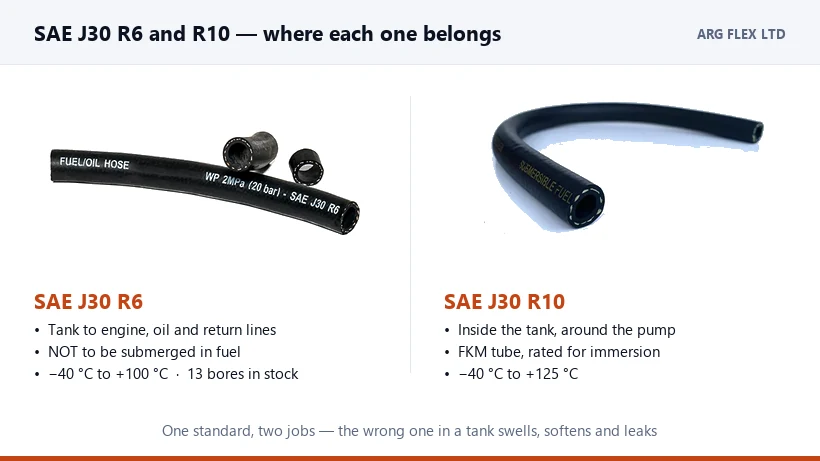
SAE J30 R6 and SAE J30 R10 sit under the same standard and are built for different jobs. R6 is a general fuel and oil line. R10 is a submersible hose for use inside the tank. The spec sheet for our R6 hose says it plainly: not designed to be submerged in gasoline. That one line decides which you need.
SAE J30 R6: the hose that runs to the engine
R6 is a flexible low-pressure hose for fuel, oil and industrial water, intended for general contact with fuel rather than permanent immersion in it.
- Tube: synthetic rubber, black, smooth, oil resistant
- Reinforcement: synthetic cord
- Cover: synthetic rubber, resistant to oil, weather and ozone
- Temperature: −40 °C to +100 °C
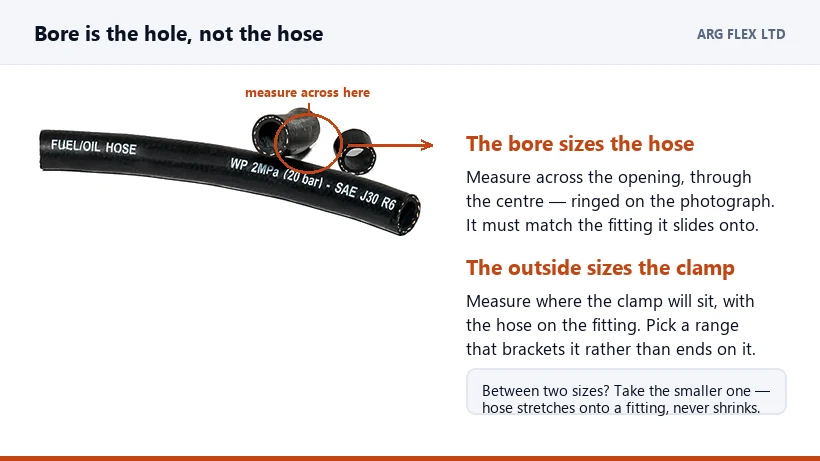
It is the hose for fuel lines between tank and engine, oil transfer, breather and return lines, and the general run of workshop fuel work. We stock it in thirteen bores from 3.2 mm to 25 mm, cut to length.
SAE J30 R10: the only one that goes in the tank
R10 is built for constant immersion. Inside and outside are both rated for permanent contact with fuel, gasoline and other petroleum products, which is what an in-tank pump assembly demands.
- Tube: FKM fluoroelastomer with a thermoplastic lining — low permeation
- Reinforcement: synthetic cord
- Cover: synthetic rubber, fuel and high-temperature resistant
- Temperature: −40 °C to +125 °C
The FKM tube is the expensive part and the reason R10 costs several times what R6 costs per metre. It is also the reason it survives where R6 would swell, soften and eventually leak.
What goes wrong when R6 is used in a tank
R6 is rated for contact with fuel, not for living in it. Submerged, the tube absorbs fuel and swells, the bore closes up, the wall softens, and the hose eventually fails at the clamp. Modern fuels make it worse: ethanol blends are harder on rubber than the petrol the older hose grades were written for. A fuel leak inside a tank is not a leak you notice early.
Choosing between them
- Inside the tank, around the pump or sender — R10, and only R10.
- Tank to engine, return and breather lines, oil transfer — R6.
- Fuel and coolant in the same engine bay — DIN 73379 B also handles cooling liquids and carries a heat-resistant textile braid, rated −40 °C to +90 °C.
- Fuel injection pressure — neither R6 nor R10 is a high-pressure injection line. Check the working pressure your system needs before ordering.
Ordering
Both are sold by the metre and cut to the length you ask for, from 1 m to 50 m. Tell us the bore and the run and we will cut it. If you are not certain which grade your application needs, send us the make, the model and where the hose sits — it is a short conversation and much cheaper than the wrong hose.